
Emilia Romagna
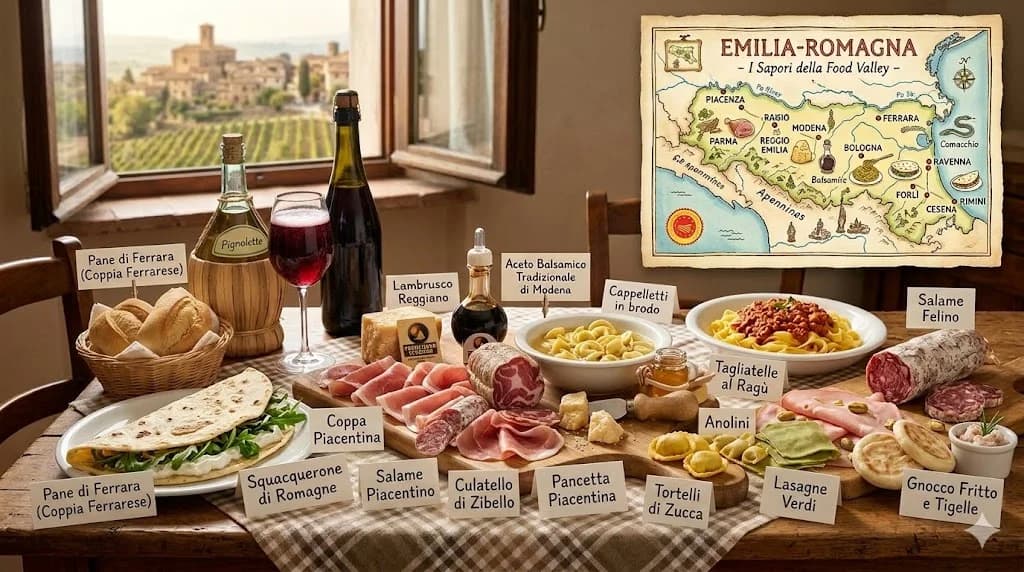
Emilia-Romagna: a complete guide to regional cuisine, typical products and gastronomic traditions
Emilia-Romagna is one of the symbolic regions of Italian and international gastronomy. A territory that combines fertile plains, generous hills and the Adriatic Riviera, giving life to one of the most recognisable and distinctive culinary traditions in Italy.
This guide delves into Emilia-Romagna cuisine, PDO and PGI products, typical dishes and local traditions, with an encyclopedic twist but designed for SEO use and consultation on Wikicibo.
Emilia-Romagna: territory and gastronomic identity
The region stretches from the Po Valley to the Adriatic Sea, crossing a variety of landscapes that directly influence local cuisine.
The main gastronomic cities include:
Bologna, the heart of Emilian cuisine
Parma, capital of cured meats and Parmesan cheese
Modena, land of balsamic vinegar and great traditions
Ferrara, Renaissance cuisine and historic cured meats
Rimini, a symbol of Romagna's seafood and piadina cuisine
The regional gastronomic culture is born from the encounter between:
peasant tradition of the Po Valley
Renaissance court culture
Adriatic seafood
strong domestic identity linked to fresh pasta
Characteristics of the Emilian-Ro cuisine magnola
The cuisine of Emilia-Romagna is considered one of the most structured and recognisable in Italy, based on a few ingredients but highly specialised processes.
Key ingredients of regional cuisine
fresh eggs and egg pasta flour
Par migiano Reggiano PDO
pork and cured meats
richbutter and broths
traditional balsamic vinegar
oily fish and Adriatic seafood
piadina and soft wheat flour
Distinctive elements
centrality of the hand-drawn dough
culture of ragout and long sauces
balance between land cuisine and sea
cuisinestrong norcina tradition
valorizz action of long ageing
Typical products of Emilia-Romagna (PDO, PGI, Doc)
The regional agri-food heritage is among the richest and most certified in Europe.
PDO and PGI cheeses and cured
meatsParmigiano Reggiano PDO
long-aged cheese produced in Parma, Reggio Emilia, Modena and Bologna
Prosciutto di Parma PDO
cured sweet ham, a symbol of Parma's tradition
Mortadella Bologna PGI
soft and aromatic sausage, among the most iconic in Italy
Cotechino Modena PGI
typical product of the winter holidays
Zampone Modena PGI
pork stuffed in the rind
Coppa Piacentina PDO
cured meats typical of the hills of Piacenza
Pancetta Piacentina PDO
fat and tasty product of the Norcina tradition
Salame Piacentino PDO< /strong>
aromatic sausage typical of Piacenza
Salama da Sugo di Ferrara PGI
Ferrara specialties with an intense and spicy flavour
Vinegars, condiments and symbolic products
Traditional Balsamic Vinegar of Modena PDO
Traditional Balsamic Vinegar of Reggio Emilia PDO
Saba (traditional cooked must)
Cervia sweet
Baked goods and identities
Piadina Romagnola PGI
symbol of Romagna, widespread especially in the Riviera of Rimini
Typical dishes of Emilia-Romagna
The regional cuisine is famous for its extraordinary variety of first courses and fresh pasta preparations.
Traditional first courses
Tortellini in broth
symbolic speciality of Bologna, with meat and Parmesan filling
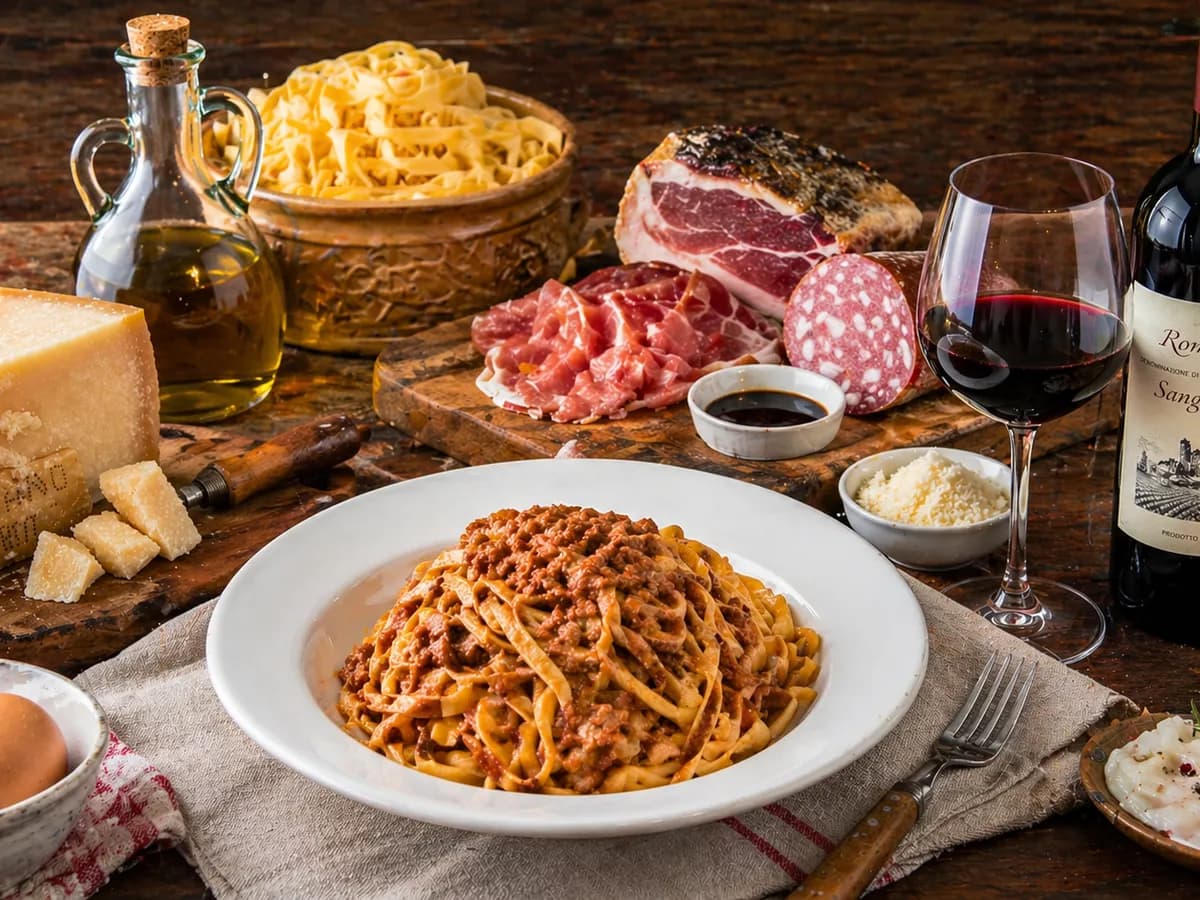
Tagliatelle with ragout
egg pasta with traditional Bolognese sauce
Bolognese lasagna
layers of puff pastry, sauce and béchamel
Cappelletti romagnoli
stuffed pasta typical of Romagna
Passatelli in broth
bread dough, eggs and Parmesan cheese
Grass with sausage
short pasta with flavourful sauce
Iconic main courses and dishes
Zampone and cotechino with lentils >
festive dish
Mixed roasts and boils
typical of the peasant tradition
Stuffed Piadina
symbolic preparation of Romagna, especially in Rimini
Wines of Emilia-Romagna
The region boasts a wide and diverse wine production.
Emilian wines
Lambrusco Doc (in different territorial variants)
Gutturnio Doc (Colli Piacentini)
Malvasia di Parma
Romagna wines
Sangiovese di Romagna DOC
Albana di Romagna DOCG (white and passito)
Trebbiano Romagnolo
drinks wings
Nocino (walnut liqueur)
Saba (cooked must)
local herbal liqueurs
Gastronomic production areas
Emilia
Parma: sa lumi and Parmigiano Reggiano
Modena: balsamic vinegar and zampone
Bologna: fresh pasta and puff pastry
Piacenza: cured meats and hill wines
Ferrara: Renaissance cuisine and salama from sauce
Romagna
Rimini: piadina and seafood
Ravenna: maritime and Byzantine tradition
Forlì-Cesena: rural cuisine and Sangiovese wines
Traditions, festivals and gastronomic events
The regional gastronomic culture is strong linked to local fairs and festivals.
Parmigiano Reggiano Fair in the provinces of Emilia
Piadina festivals throughout Romagna
Lambrusco Festival between Modena and Reggio Emilia
Fairs dedicated to cotechino and zampone in Modena
Food and wine events in the hills of Bologna
Among the relevant contemporary events:
food and wine events widespread in cities of art
taste trails in the vinegars of Modena and Reggio Emilia
Curiosities about Emilian-Ro cuisine magnola
The Bolognese-style sauce has a traditional historical coding
Egg puff pastry is considered regional domestic heritage
Parmigiano Reggiano follows a discipline unchanged for centuries
Piadina has very ancient origins, already widespread at the time roman
Traditional balsamic vinegar can take over 12 years to age
Tips for tasting Emilian-Romagna cuisine
To make the most of the regional gastronomic experience:
taste fresh pasta in the historic taverns of Bologna
visit Parmigiano Reggiano dairies to see the production
taste Prosciutto di Parma at room temperature
try the piadina from Romagna in both traditional and contemporary versions
pair Lambrusco and Sangiovese with local dishes
visit the vinegars of Modena and Reggio Emilia
Conclusion
Emilia-Romagna is one of the greatest expressions of Italian gastronomic culture. It is a region where each city has a strong culinary identity, but all share a coherent gastronomic system, based on quality of raw materials, craftsmanship and historical memory.
From Parmigiano Reggiano di Parma to Piadina di Rimini, from tortellini di Bologna to balsamic vinegar from Modena, this region offers one of the most complete and recognisable gastronomic heritages in the world.