
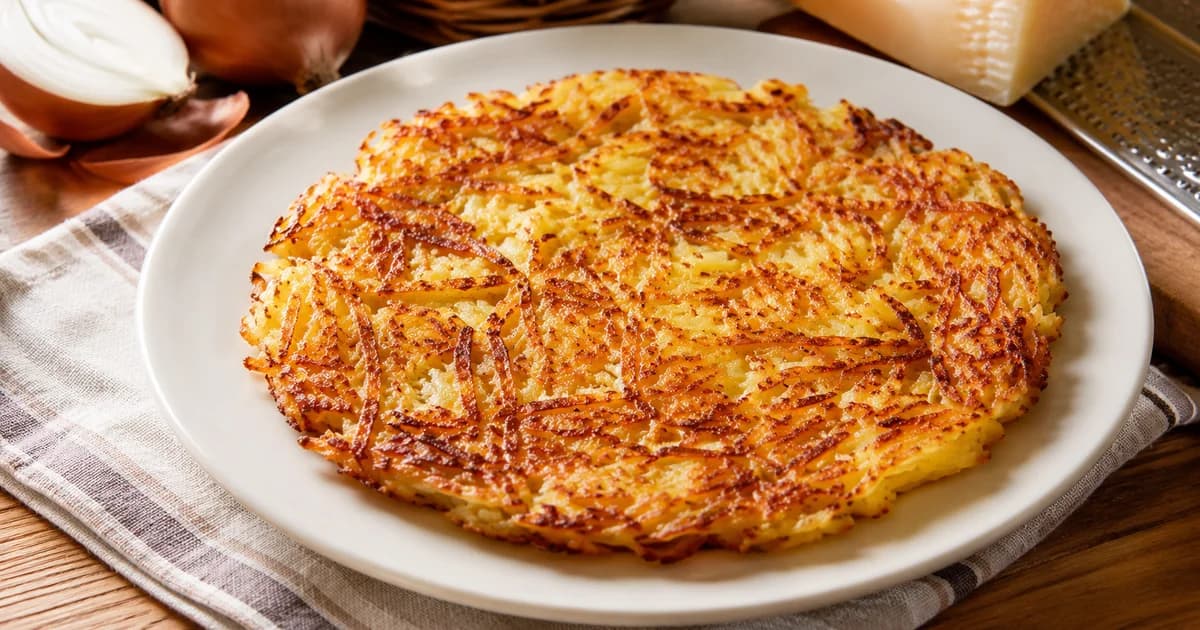
For the frico
Grate or thinly cut both types of Montasio.
Combine the mashed potatoes in the pan with the onion, stir briefly and distribute the cheese evenly over and around the mixture. 4. Regular salt (in moderation, the cheese is already savory) and add a pepper grind. Press the mixture with a spatula until it forms a compact cake about 2–3 cm thick. 5. Cook over medium-low heat for 12–15 minutes, without stirring, until the bottom is well golden and crispy.
With the help of a lid or a flat plate, turn the frico over with a decisive gesture.
The success of the frico depends to a large extent on the choice of cheese: using only fresh Montasio produces a result that is too soft and devoid of structure, while over-aged cheese is likely to be too dry and burnt before melting properly. The three-quarter fresh and one-quarter cured ratio is the most reliable balance to get the right spinning with the crispy crust.
The non-stick steel or cast iron pan is preferable to thin coated ones: it distributes heat evenly and avoids hot spots that burn the cheese before the potatoes heat up. The fire must be medium-low all the time: raising it to accelerate the crust is the most common mistake and leads to a still cold interior with a charred exterior.
For tipping, use a serving plate slightly wider than the pan, place them together and flip in one dry motion.
This should be done away from fire and with your hands protected.
Frico with potatoes and onion is one of the most recognizable dishes of Friulian cuisine, born among the huts and pastures of the Carnic Prealps as a robust meal for cheesemakers and shepherds. It is a rustic cake in which the Montasio cheese, in its different ripenings, blends with the boiled potatoes and the stewed onion to form a golden crust and crispy on the outside, soft and flowing in the heart.
It is not an omelette, it is not a crepe: frico has its own precise identity, difficult to classify but immediate to recognize at the first taste.
In the meat tradition and in that of the Friulian plain, frico accompanied white or yellow polenta, and often closed meals on feast days or on collective work occasions such as haymaking. The taste profile is decisive: the fat of the cheese envelops the sweetness of the onion and the neutral texture of the potato, creating a balance between flavour and softness.
It is brought to the table whole, still sizzling from the pan, and divided into slices like a cake.
The classic pairing remains the polenta, but it is not uncommon to find it served as a stand-alone main course or as a hearty appetizer in the region's taverns.
Frico comes in different forms depending on the area and the ageing of the cheese available. - Crispy frico (frico crot): version of Carnia without potatoes or onions, made with only grated cheese melted in a pan until it becomes a thin and fragrant disc, similar to a waffle. It is the oldest and most radical form of the dish.
Soft frico: prepared with Montasio almost exclusively fresh, it has a creamy texture and is served with polenta as a single dish. It does not crust and mixes during cooking.
Frico with Cavasso red onion: variant of the Pordenone foothills that uses the local red onion instead of the white one, with a sweeter and slightly acidic note.
Variation with aromatic herbs: in some families a pinch of fresh thyme or marjoram is added to the potatoes, a practice documented in the domestic cuisine of the Resia Valley.
Friulano (Tocai Friulano) DOC: the white wine symbol of the region, with its bitter almond note and soft structure, holds the fatness of the cheese well without overpowering it. - Ramato del Friuli DOC: a Pinot Grigio grape vinified in contact with the skins, with light tannins and copper colour, balances the flavour of Montasio and accompanies the golden crust without weighing it down.
Unfiltered Friulian Lager craft beer: carbonation cleanses the palate between bites, and the delicate bitterness of hops pleasantly counteracts the persistence of fat.
Natural sparkling water with lemon slice: for those who prefer non-alcoholic, minerality and mild citric acid perform a similar function of cleansing the palate.
The cheese tends to separate and the potato becomes watery on thawing, compromising the texture of the dish.
per serving
The roots of frico lie in the system of Friulian alpine huts, where cheesemakers had to manage surplus cheese and find ways to consume the less regular pieces of the production.
The first written attestations of the term date back to the fifteenth century: Martino de Rossi, a cook of Como origin active at the court of the Patriarch of Aquileia Ludovico Trevisan, describes in his culinary treatise a preparation based on fried cheese that scholars identify as a direct ancestor of frico.
The addition of potatoes is subsequent and linked to the diffusion of the tuber in the Friulian countryside during the eighteenth century, when cultivation stabilised in the hilly and mountainous areas of Carnia. This step transformed the frico from a simple cheese pod to a complete and substantial dish, capable of feeding a family with poor ingredients.
The version with potatoes and onions was consolidated in the nineteenth century as a dish of peasant cuisine, and in the twentieth century it found its stable place in the taverns and trattorias of the Friulian plain and mountains, becoming a symbol of regional gastronomic identity.


