
For the strawberries in red wine
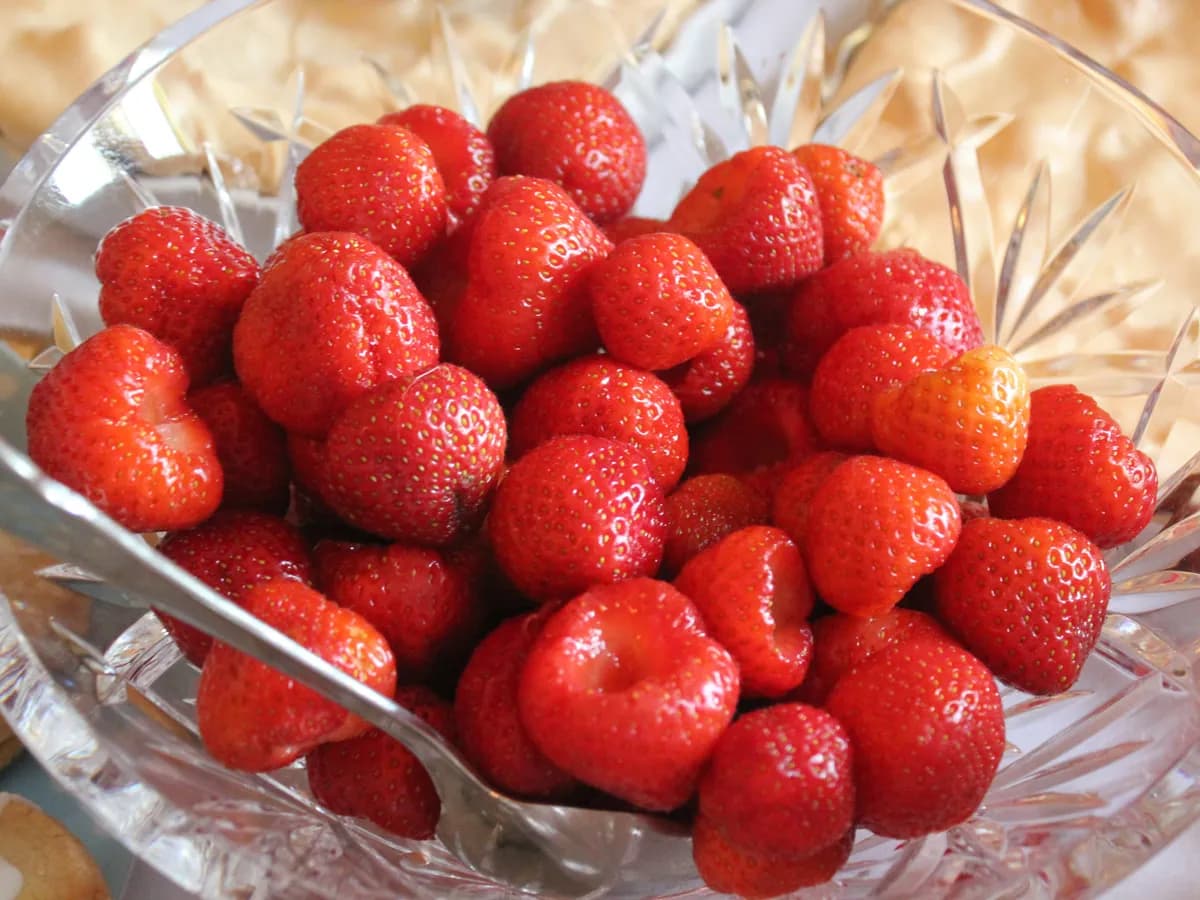
The success of the dish depends almost entirely on the quality of the strawberries: they must be ripe but firm, with the pulp still compact. Too soft strawberries flake off during maceration and make the syrup cloudy. Avoid soaking them: a quick rinse under running water preserves the aroma and prevents them from soaking in water.
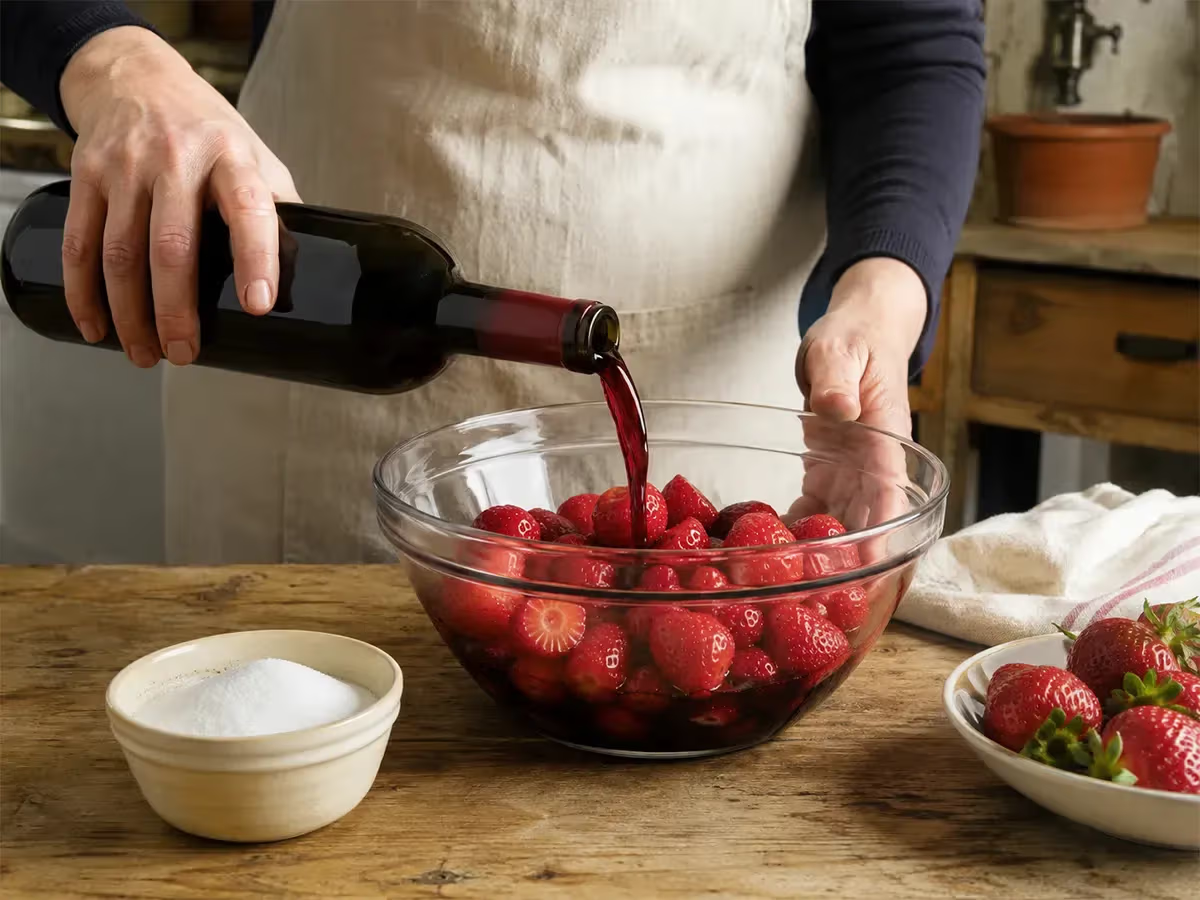
The choice of wine is decisive. A young Barbera d 'Asti, with its lively acidity, enhances the freshness of the fruit without weighing it down. A Dolcetto, more tannic, gives a pleasant bitter note. Avoid wines with excessive tannic structure or very old: the complexity of the wine does not translate into a better result, on the contrary it tends to cover the fruit.
The sugar must be dosed carefully: the main function is to extract the juices by osmosis, not to sweeten them sharply. If strawberries are particularly sugary, reduce to 40 g. For the mise en place of the restaurant, prepare the dish at least 90 minutes in advance and serve at a temperature of about 8-10 degrees, not directly from the refrigerator.
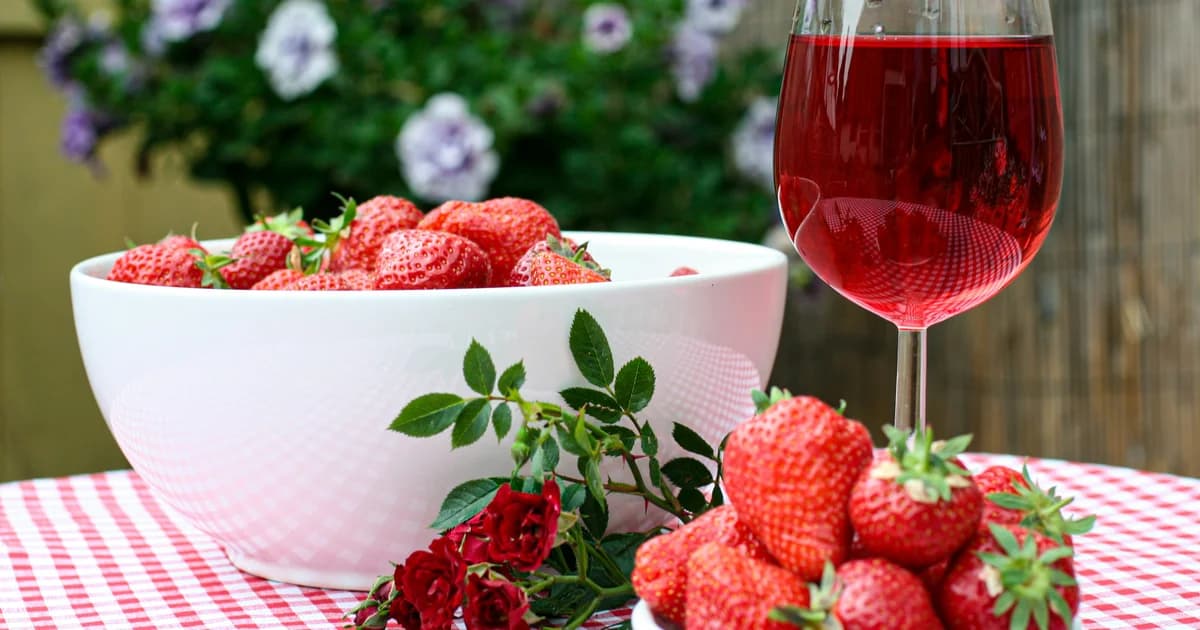
Red wine strawberries are a traditional Piedmontese peasant dessert, born in May and June when the local markets are filled with strawberries grown in the countryside between Cuneo, Asti and Monferrato.
The preparation is disarmingly simple, yet the result brings with it an aromatic complexity that tells the story of the territory with precision: the herbaceous and acidulous aroma of the strawberry is intertwined with the soft tannins of a Barbera or a Dolcetto, softened by little sugar and, in the most widespread version, by a scratch of lemon or some fresh mint leaf.
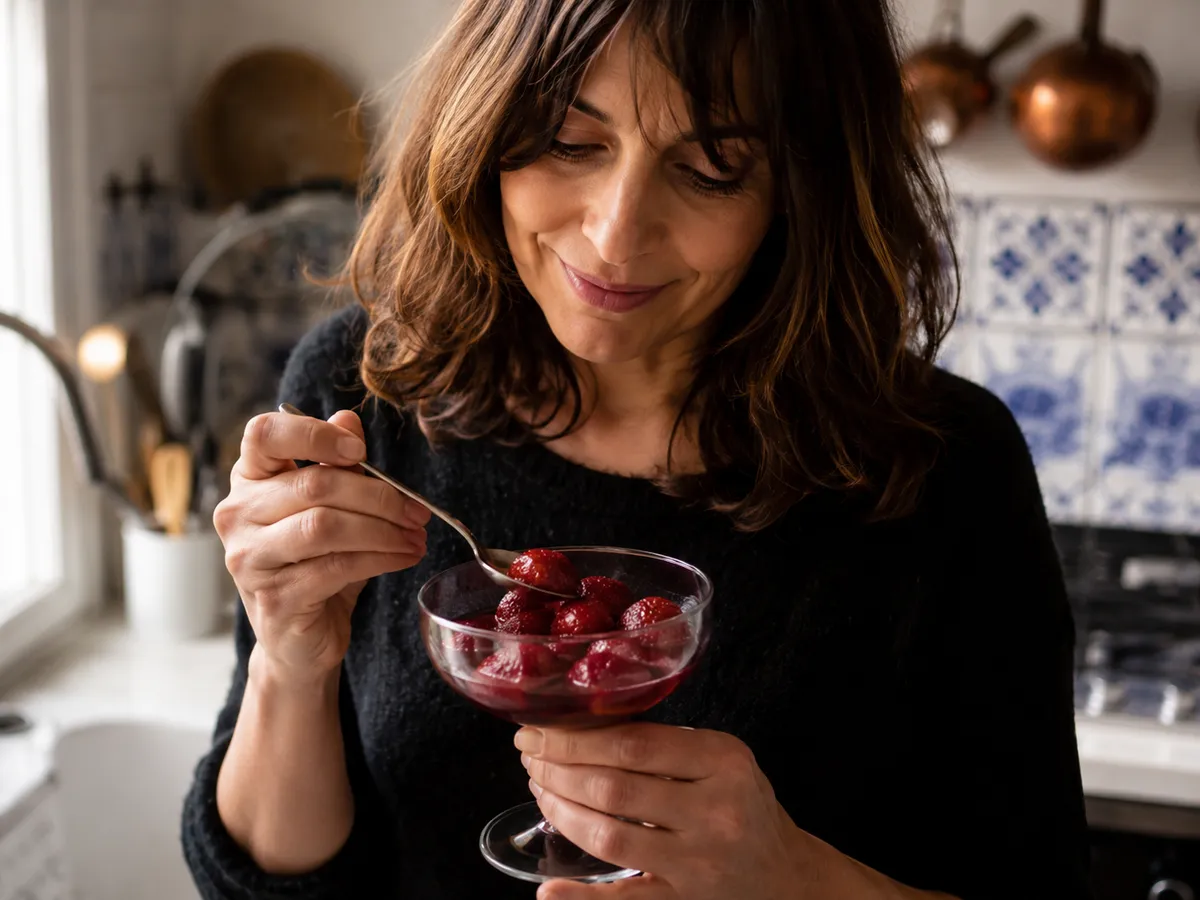
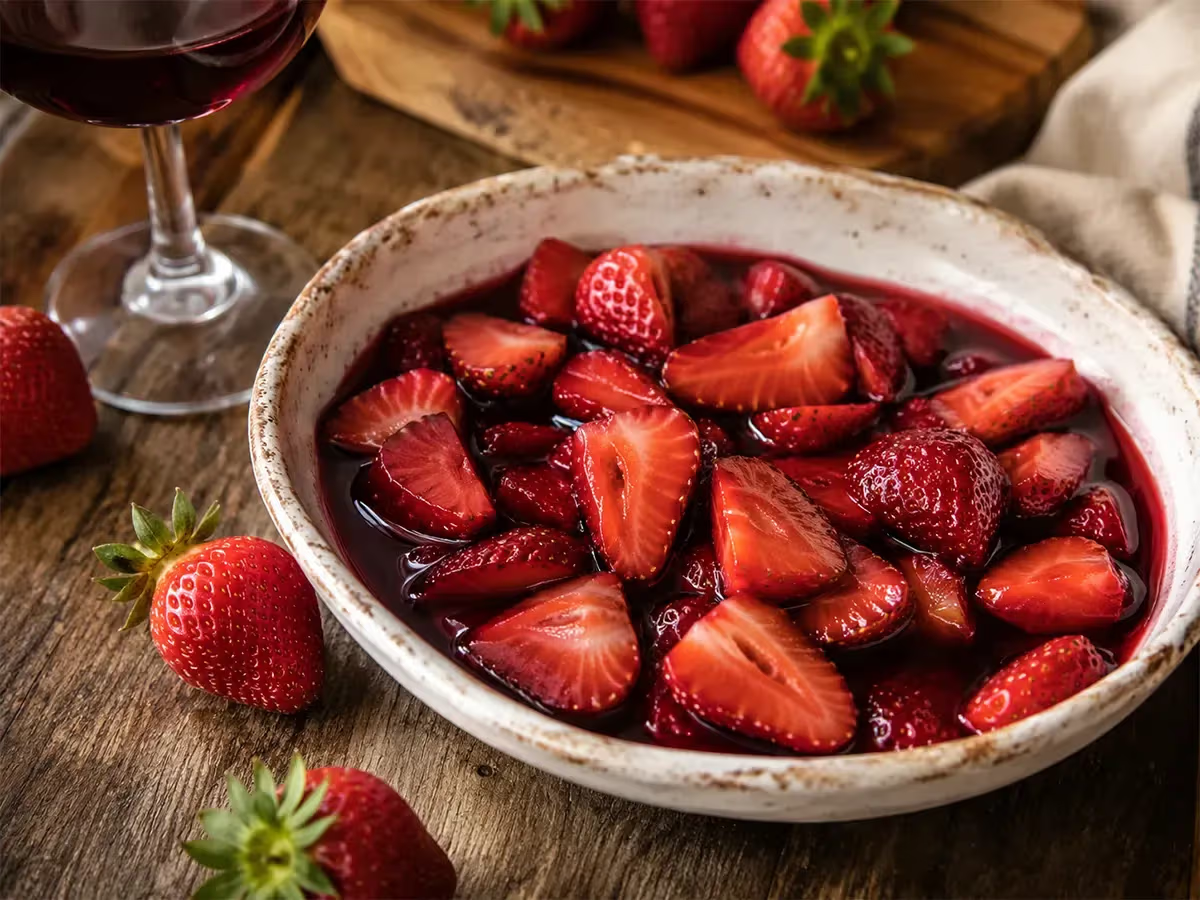
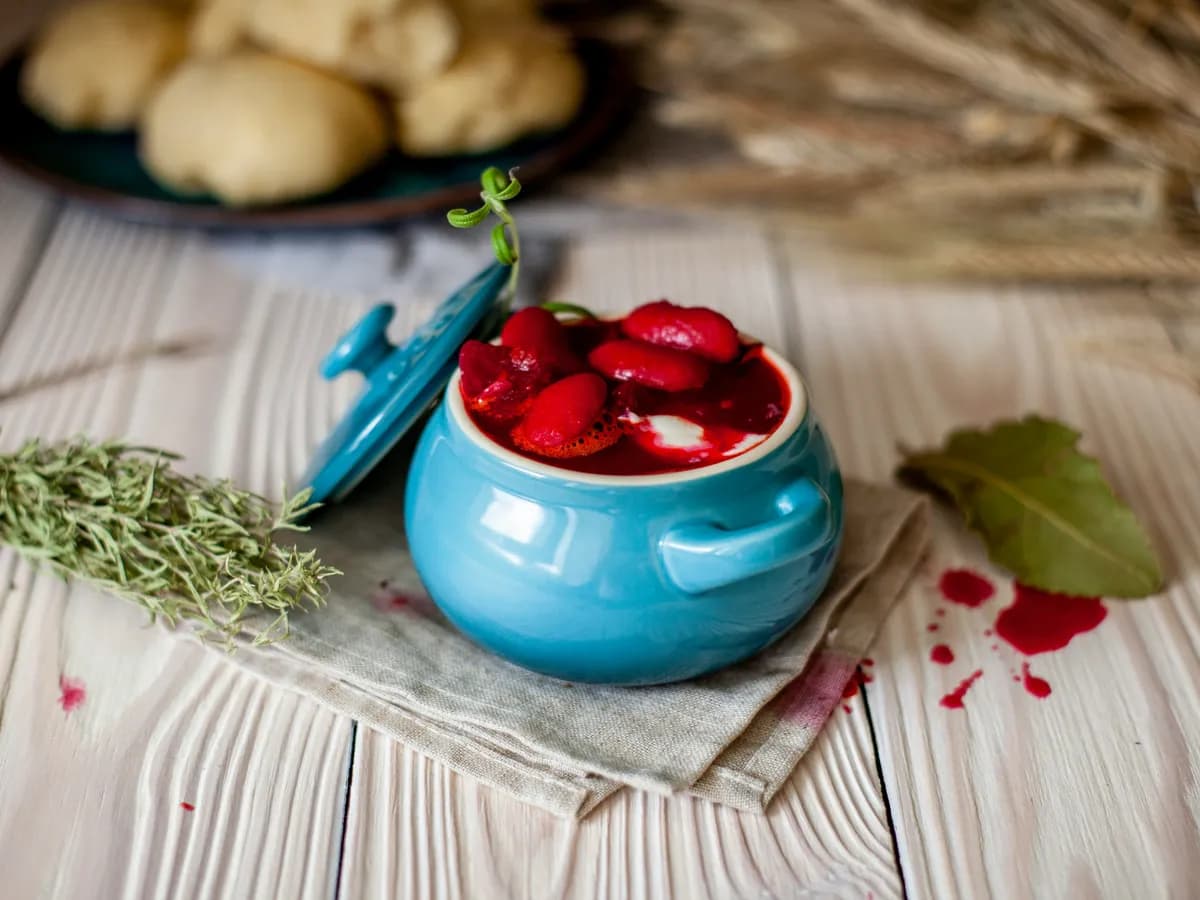
It is not a restaurant dish, at least not in its origins. It is the Sunday end-of-meal dessert in the farmhouse, served in ceramic bowls at the table set under the porch.
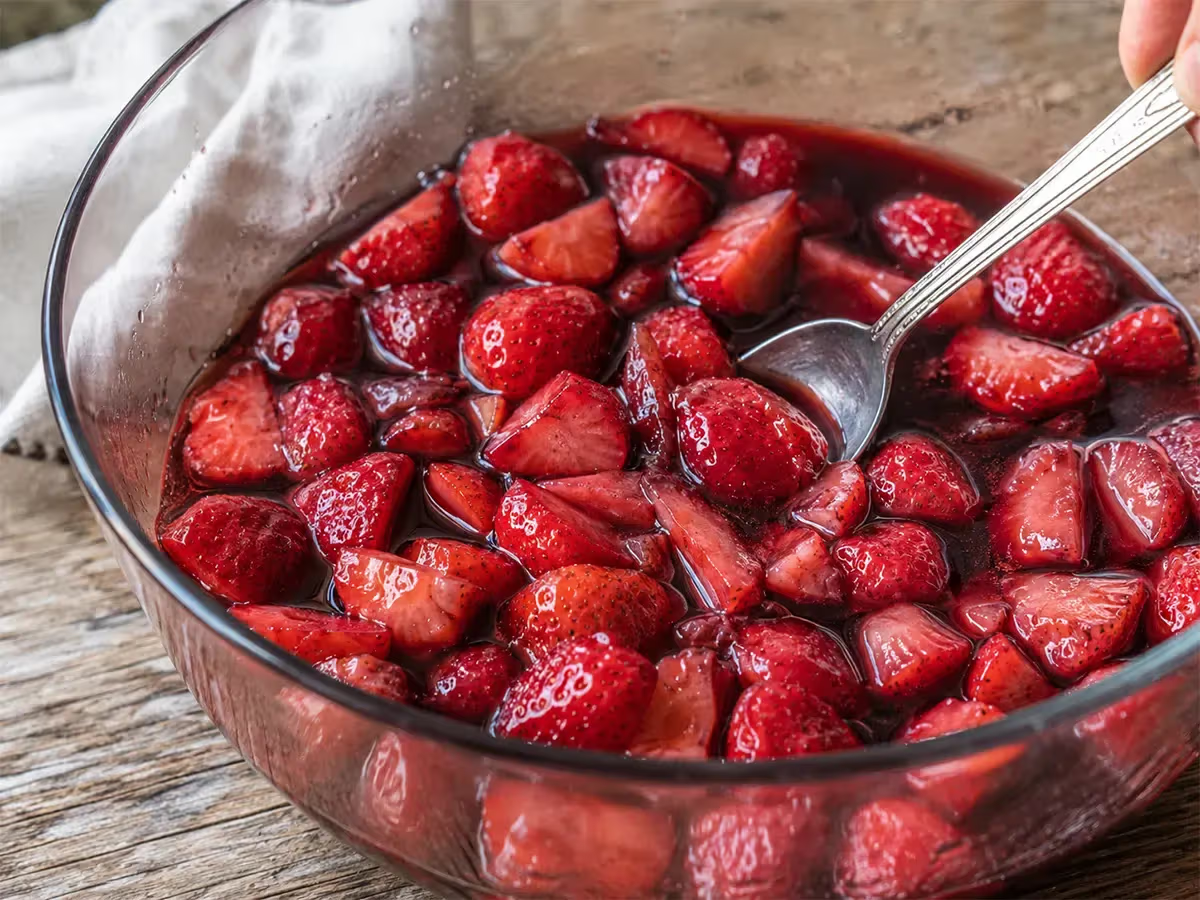
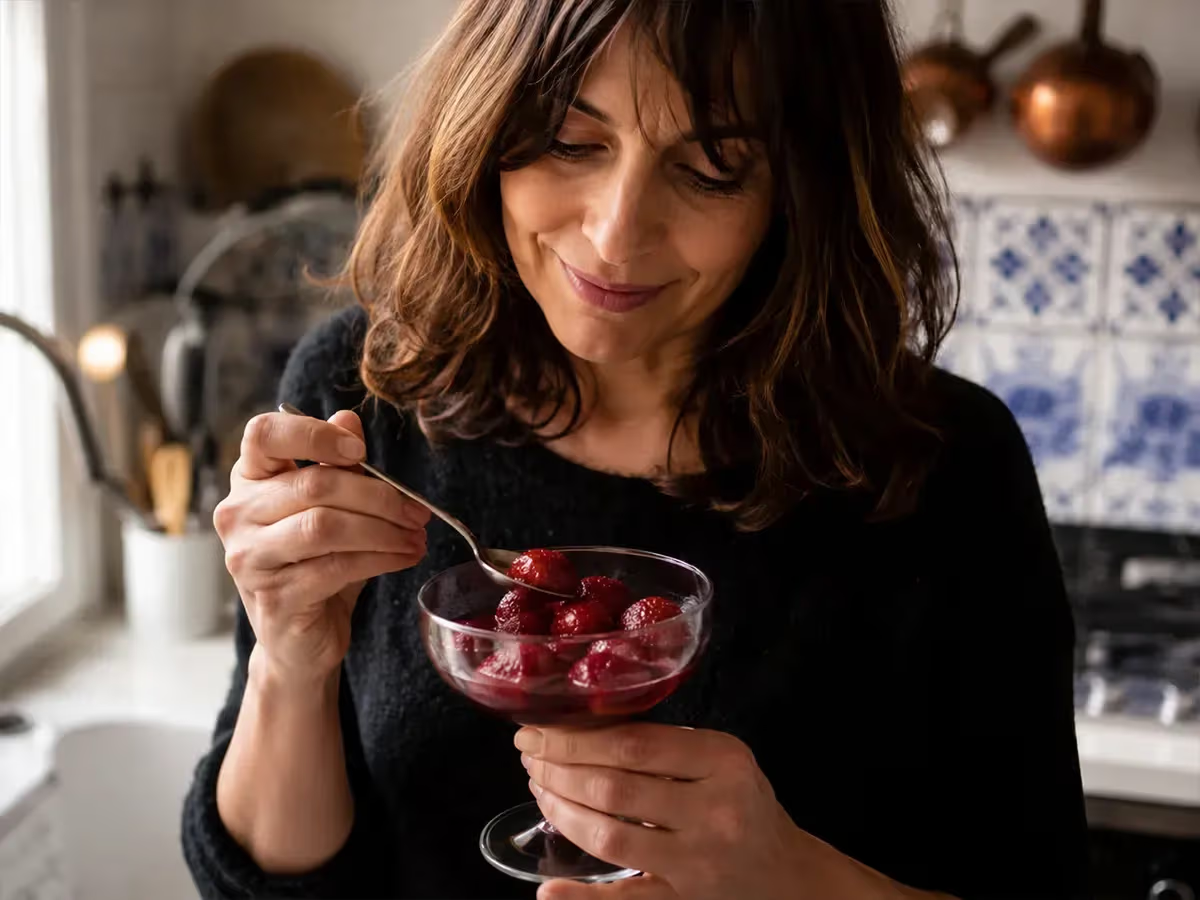
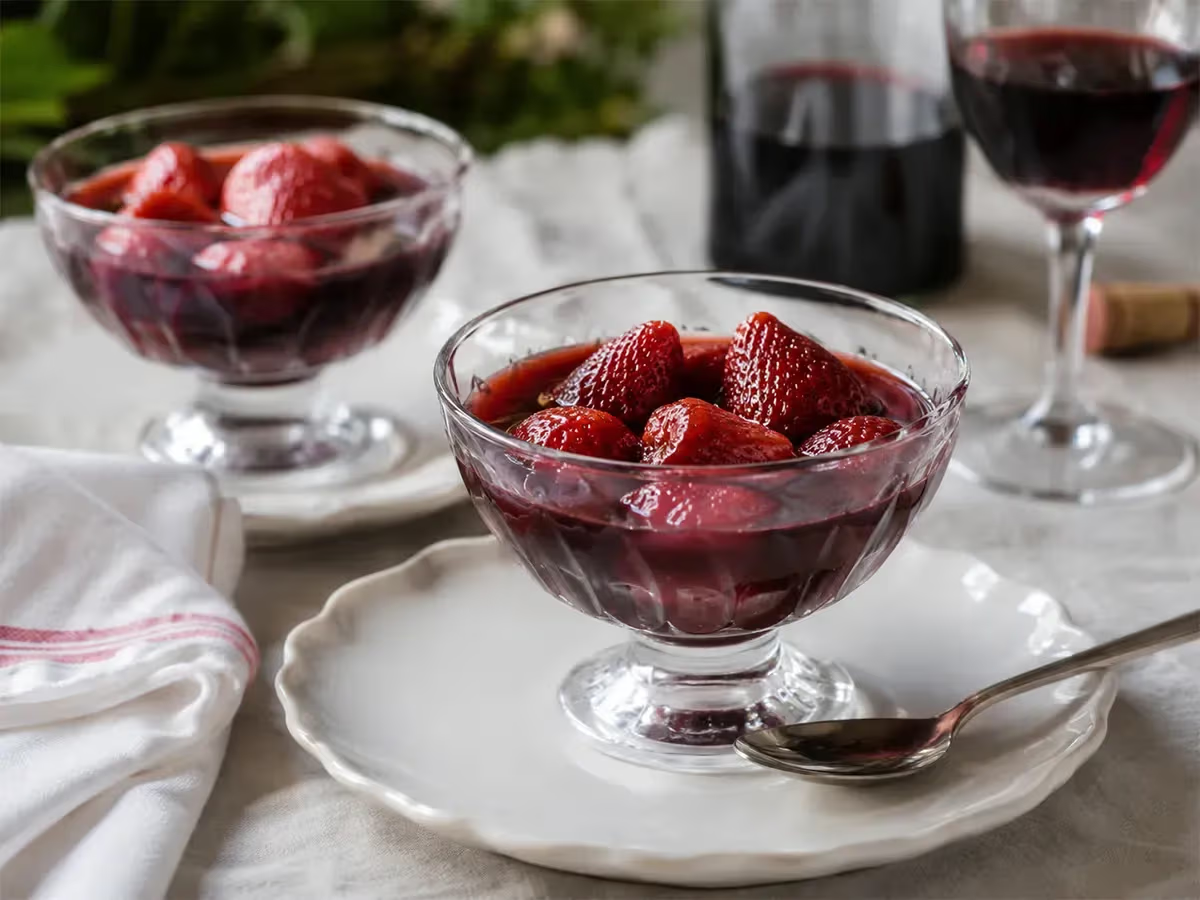
It is brought to the table after a long stop in the refrigerator, when the wine has rubbed the pulp of the strawberries and the juice has turned into a kind of light and fragrant syrup. It goes well with dry biscuits, with sponge cake or simply on its own, as a fresh closure to a summer lunch.
The recipe admits variations that are consolidated in Piedmontese domestic use and in some more recent interpretations.
per serving
In the Piedmontese countryside, wild strawberry grew spontaneously along the edges of vine rows even before its cultivation became systematic. Pairing with local red wine is almost a natural consequence of that landscape: both products mature in the same season, on the same clayey soils of Monferrato and the Langhe, and share an aromatic structure that makes them complementary.
The recipe, in its current form, was consolidated during the nineteenth century as a closing dessert in the farms, where there was neither the time nor the tools for elaborate preparations. Wine, cane or beet sugar and seasonal fruit were always available ingredients. No cooking needed, no special equipment needed.
In the second half of the twentieth century, with the spread of domestic refrigerators, prolonged cold maceration became an integral part of the recipe, improving the result and allowing the dish to be prepared in advance. Even today in the trattorias of Asti it appears as a summer dessert, in its simplest and most recognizable form.

